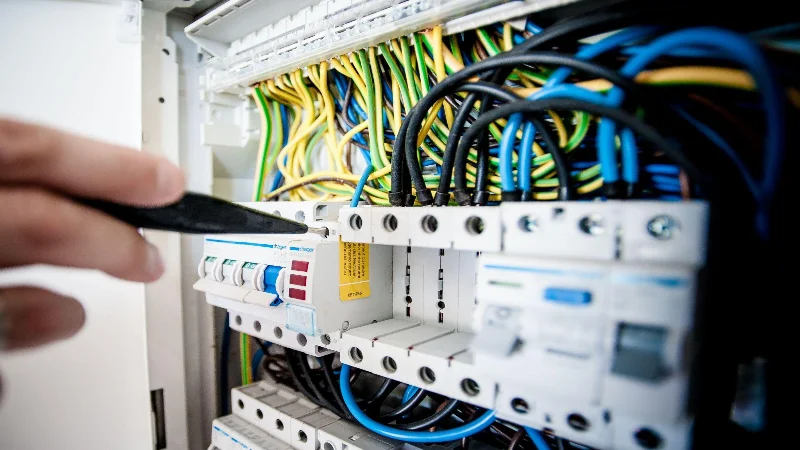
Most of the time, a breaker tripping isn’t a crisis. It flips; you reset it, and life goes on. That’s the system working the way it’s supposed to, cutting power before a minor issue becomes a hazard. What you don’t want is the same breaker giving out over and over. When that starts happening, the breaker isn’t the problem so much as the messenger.
Chasing down the reason early can save you real money and hassle. We’re talking anything from a ruined appliance to, in rare cases, a house fire. Here’s a look at what usually causes these repeat trips, and how to figure out which one you’re dealing with.
Common Causes of Repeated Circuit Breaker Trips
Too Many Appliances, Not Enough Circuit
Overload is the usual suspect, and it’s about as simple as it sounds. A circuit can only handle so much power safely. Plug a space heater, a microwave, and a hair dryer into the same one, and you’ve asked for more than it can give. Rather than let the wiring cook, the breaker cuts out.
Damaged Wiring or Faulty Appliances
A short circuit is what you get when a “hot” wire meets a neutral wire and electricity surges through where it never should. Worn insulation causes plenty of these. So does chewed-up wiring – rodents earn a fair share of the blame. A bad appliance can be behind it too. Shorts tend to trip the breaker instantly, and you may notice a burnt smell or dark scorch marks near an outlet.
Ground Faults
Sometimes electricity strays off course entirely, slipping into water, a wall, or a person. That’s a ground fault. It turns up most often in kitchens, bathrooms, and basements, since those rooms deal with moisture. Keep seeing trips in those areas? A ground fault is worth suspecting.
An Aging or Failing Breaker
Breakers don’t last forever. Like anything with moving parts, they wear down. A tired or defective one might trip even when barely anything’s running on the circuit. If your panel dates back a few decades, the trouble may have nothing to do with what you plugged in – the breaker itself could be ready for replacement.
Moisture in Panels or Outlets
Water near electricity is trouble, full stop. Even a bit of dampness inside a panel or outlet can set off repeat trips. This one deserves your attention, because it bumps up the risk of both shock and fire.
How to Diagnose the Problem
Pay attention to the pattern first. Note which circuit trips and when it does it. Is there a certain time of day involved, or does it only act up when particular appliances run? Turn off everything on that circuit, reset the breaker, and bring devices back one at a time. Trip the moment a specific appliance kicks on? You’ve likely landed on an overload or a faulty device.
Things look different if the breaker trips with nothing connected, or flips again the instant you reset it. That leans toward a wiring fault, not a load problem. A multimeter lets you check voltage and catch irregularities, but you’ll want some electrical experience before you go poking around.
A few signs mean you should stop entirely. If you smell burning, see scorch marks, or feel heat on the breaker, set the tools aside and call a licensed electrician. Same rule applies to repeat trips you simply can’t trace to overload. For sudden, odd-hour trips you can’t explain, it helps to keep the number for an emergency electrician in Montclair handy, since these situations can escalate quickly.
Don’t Ignore the Warning Signs
A breaker that keeps tripping is doing its job – and quietly flagging that something needs a look. Overloaded circuit, aging hardware, a deeper wiring fault: whatever it is, finding the root cause keeps your home and family safe.
If the basics don’t fix it, don’t sit on the problem. A licensed electrician can identify exactly what’s wrong and get your system running safely for years ahead.